
Long-term stress
Daily scores bounce around. Long-term stress looks past that: it compares your last 31 days with the 90 days before them, so a slow build-up shows before it turns into a run of bad mornings.
Steps
Where to find it
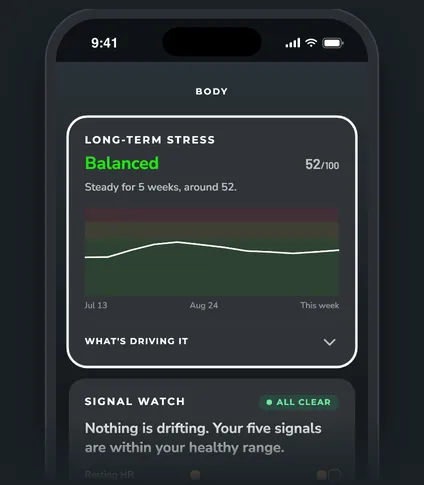
Tap Body in the tab bar. Long-term stress is the first card.
How the score is made
Three things push the score up:
- HRV lower than in the 90 days before.
- Resting heart rate higher than in the 90 days before.
- Sleep short of what WHOOP says you need.
The score runs from 0 to 100 and falls into one of four bands:
| Score | Band |
|---|---|
| Under 45 | Low |
| 45 to under 65 | Balanced |
| 65 to under 85 | Building |
| 85 and up | High |
The headline number is this week's. It updates every Monday, and the chart shows the last 12 weeks. A line under the band tells you the trend, like "Steady for 5 weeks, around 52" or "Building for 3 weeks (55 → 68)".
What's driving it
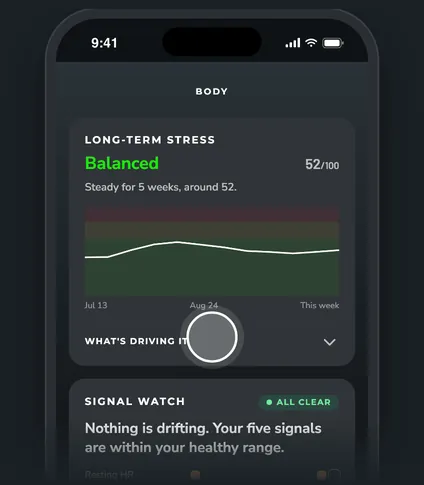
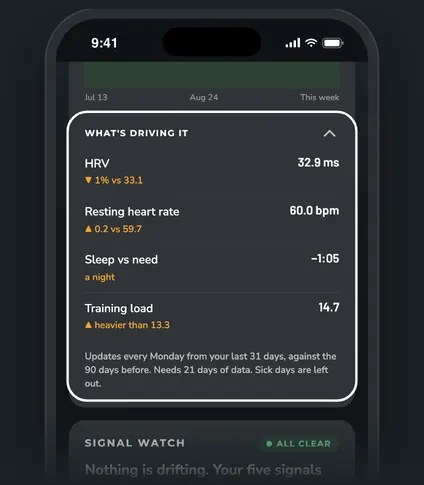
Tap What's driving it to open the breakdown. Each row shows your last 31 days against the 90 before:
- HRV, with the percent change.
- Resting heart rate, with the change in bpm.
- Sleep vs need, how far short of your sleep need you were a night.
- Training load, your average day strain, lighter or heavier than before. It's there for context. It isn't part of the score.
When there's no score yet
It needs 21 healthy days in the last 31 and 30 in the 90 before. Until then the card says how many more days it needs. Sick days are left out, so a long illness pauses the card until you've had enough healthy days again.
Good to know. ZONAL is for training and wellness, not medical advice. A high score is a nudge to look at sleep and training, not a diagnosis.
Questions
Why didn't my score change after a hard week?
It moves slowly on purpose. It looks at a whole month and only updates on Mondays.
Do travel days count?
Not when Leave travel days out of your normals is on in Travel mode. Those days are left out, like sick days.
What's a good score?
Low and Balanced are both fine. Building means the last month has been harder on you than the three before it. High means it's been a lot harder.